
Western Montana doesn’t get credit for its wind. Most people think about hail and snow when they think about roofing problems in this part of the state — but the gusts that come off the mountains and sweep through Silver Bow, Ravalli, and Beaverhead counties can hit 60, 70, even 80 miles per hour. At those speeds, wind isn’t just uncomfortable. It’s destructive.
Unlike hail damage, which is often invisible from the ground, wind damage tends to be obvious — lifted shingles, missing sections, torn flashing, debris on the roof surface. But obvious doesn’t mean simple. Wind damage that looks minor from the yard can mean your roof is open to water in ways you can’t see from below.
Here’s what Western Montana homeowners need to know about wind damage, what to look for, and how the repair and insurance process works.
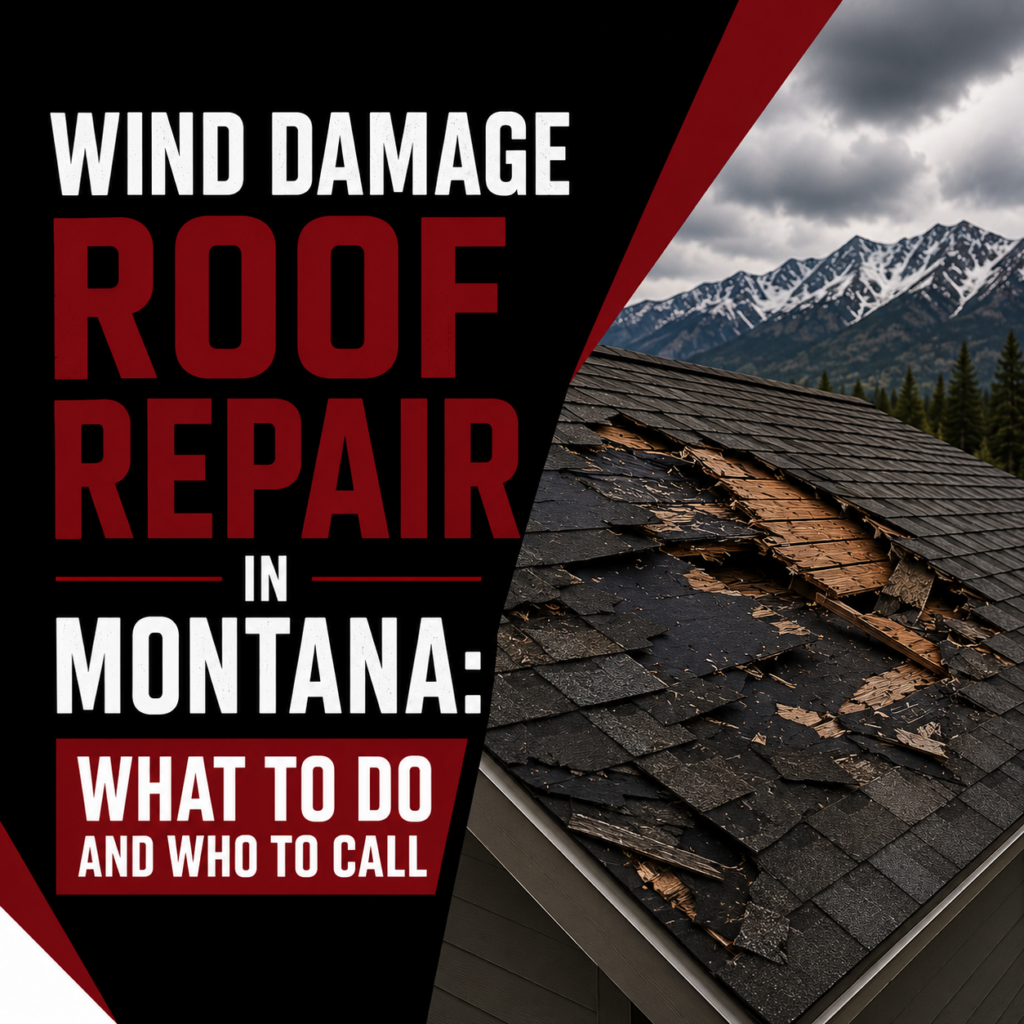
How Wind Damages a Roof
Wind doesn’t attack a roof evenly. It creates zones of negative pressure — uplift — that pull at specific areas of the roof surface. The corners and edges of the roof, the ridge line, and the areas along the eaves are the most vulnerable. This is why you often see damage concentrated at the perimeter of the roof rather than in the middle field of shingles.
Lifted and Missing Shingles
When wind gets under the edge of a shingle, it creates a prying force that breaks the adhesive seal between shingles. Once the seal fails, the shingle lifts — and a shingle that’s been lifted even once is compromised. The seal strip rarely reseals properly after being broken, which means that shingle is now vulnerable to every subsequent wind event. Repeated lifting eventually tears the shingle free entirely.
Torn or Lifted Flashing
Flashing at the ridge, along walls, and around chimney bases is held in place by fasteners and sealant. High winds put lateral stress on flashing that sealant alone isn’t designed to resist. Lifted or torn flashing is one of the most common and most underestimated results of a wind event — it’s not always visible from the ground, but a gap in flashing is a direct water entry point.
Damaged Ridge Cap
The ridge cap — the shingles that run along the peak of the roof — takes the most direct wind exposure of any part of the roof. Ridge cap failures are common after high-wind events in Western Montana and often go unnoticed until water infiltrates the attic along the ridge line.
Debris Impact
Wind carries debris — branches, gravel, loose material from neighboring properties. Impact from wind-driven debris can crack shingles, puncture membranes, and dent or tear flashing. A single branch impact in the right spot can create a leak point that isn’t obvious until the next rain.
What to Check After a High-Wind Event
You don’t need to get on the roof yourself — and we’d advise against it. But a ground-level inspection after a significant wind event tells you a lot:
- Walk the perimeter and look for shingles or shingle fragments on the ground
- Check gutters for granule accumulation — wind-lifted shingles shed granules
- Look along the ridge line for any visible gaps or missing cap shingles
- Inspect visible flashing around chimneys and along any wall transitions
- Check inside the attic for any new daylight visible through the decking, or new moisture on framing
If you see any of these signs — or if you experienced a major wind event and just aren’t sure — schedule a free inspection before the next rain arrives.
Wind Damage and Your Insurance Policy
Wind damage is a covered peril under virtually every standard homeowner’s insurance policy in Montana. If your roof sustained damage in a wind event, you likely have a valid claim — but the process matters.
The same principles that apply to hail damage claims apply to wind claims: document everything before any cleanup, file promptly, and have an independent contractor inspection completed before or alongside the adjuster’s visit. AMPCo can document wind damage professionally and be present during the adjuster’s inspection to make sure nothing is missed.
One thing specific to wind claims: policies often require that damage be reported within a specific timeframe after the event. Don’t wait. A lifted shingle that leads to interior water damage creates a more complicated claim than the original wind damage would have.
Wind Damage Repair: What the Work Actually Involves
Wind damage repair scope depends entirely on what the inspection finds. Common repair scenarios include:
Shingle Replacement
Missing or severely lifted shingles need to be replaced, not just re-nailed. A shingle whose seal strip has been broken will not reliably reseal in Montana’s climate. We source matching material where possible, but on older roofs the match may not be perfect — which is one reason insurance adjusters sometimes approve full-plane replacement when damage is concentrated in a visible area.
Flashing Repair or Replacement
Lifted or torn flashing needs to be properly re-embedded and sealed — not just pushed back down and caulked. Depending on the extent of the damage, we may need to lift surrounding shingles to properly reset the flashing and restore its waterproof integration with the roof system.
Ridge Cap Replacement
Ridge cap replacement is straightforward but needs to be done correctly. Improper nailing patterns or insufficient overlap on ridge cap shingles is exactly how the next wind event causes the same problem again.
Full Replacement
If wind damage is widespread — multiple roof planes affected, significant flashing damage, decking exposed — or if the roof was already near end of life when the event hit, a full roof replacement may be the most practical and most insurable outcome.
Get a Free Wind Damage Inspection from AMPCo Construction
AMPCo Construction serves all of Western Montana — Butte, Anaconda, Hamilton, Dillon, Stevensville, Deer Lodge, and surrounding communities. If you’ve had a significant wind event and you’re not certain about the condition of your roof, a professional inspection is the right first step.
Schedule your free inspection online or call us at (406) 310-1077. We’ll tell you exactly what the wind did — and exactly what it will take to fix it.