Montana winters demand more than a standard roof. AMPCo installs ventilated cold roof systems engineered specifically to handle heavy snow, ice dams, and extreme freeze-thaw cycles.
Systems engineered for Western Montana snow loads and climate
Ice Dam Prevention
Proper ventilation eliminates the root cause of ice dams
Free Inspection
Every install starts with a no-obligation assessment
Workmanship Warranty
Every cold roof backed by our own warranty
Licensed & Insured
Montana Climate Specialists
Ice Dam Prevention
Workmanship Warranty
Montana Family-Owned
Cold Roof Installation
The Right Roof for Montana's Extreme Winters
A cold roof system is a ventilated roof design that maintains a cold temperature on the roof surface — matching the outdoor temperature to prevent the freeze-thaw cycle damage that destroys standard roofs in Western Montana's climate.
By creating an air gap between the insulation and the roof deck, cold roofs stop snow from melting and refreezing at the eaves — the primary cause of ice dams, water infiltration, and costly structural damage in Montana homes.
Eliminates Ice Dam Formation
Proper ventilation keeps the roof surface cold and uniform — preventing the snow melt that causes ice dams at eaves and gutters.
Protects Roof Structure
Reduces freeze-thaw stress on decking, shingles, and flashing — dramatically extending the life of your entire roof system.
Improves Energy Efficiency
Separating the insulation layer from the cold roof deck reduces heat loss through the roof in winter — lowering heating costs.
Prevents Water Infiltration
Stops the water backup caused by ice dams from working under shingles and into your home's interior walls and ceilings.
Is a Cold Roof Right for Your Home?
Cold roofs are particularly effective on homes with low-slope or complex roof lines in heavy snow areas. AMPCo's free inspection includes a cold roof assessment to determine if your home would benefit from this system.
Montana's Winter Roofing Specialists
How It Works
Our Cold Roof Installation Process
Every cold roof installation starts with a thorough assessment of your home's specific needs. Montana's climate varies — we design each system for the actual conditions your roof faces.
Cold roof systems require precise ventilation calculations and proper material selection. AMPCo has the Montana-specific experience to get it right the first time — no generic spec sheets.
We inspect your current roof system, attic ventilation, insulation, and snow load patterns to determine the optimal cold roof design for your specific home.
02
System Design & Estimate
We design a ventilated cold roof system specific to your home's geometry, local snow loads, and climate conditions — with a full written estimate before any work begins.
03
Material Procurement
We source all materials — ventilation components, counter battens, underlayment, and roofing — rated for Montana's extreme temperature range and snow loads.
04
Cold Roof Installation
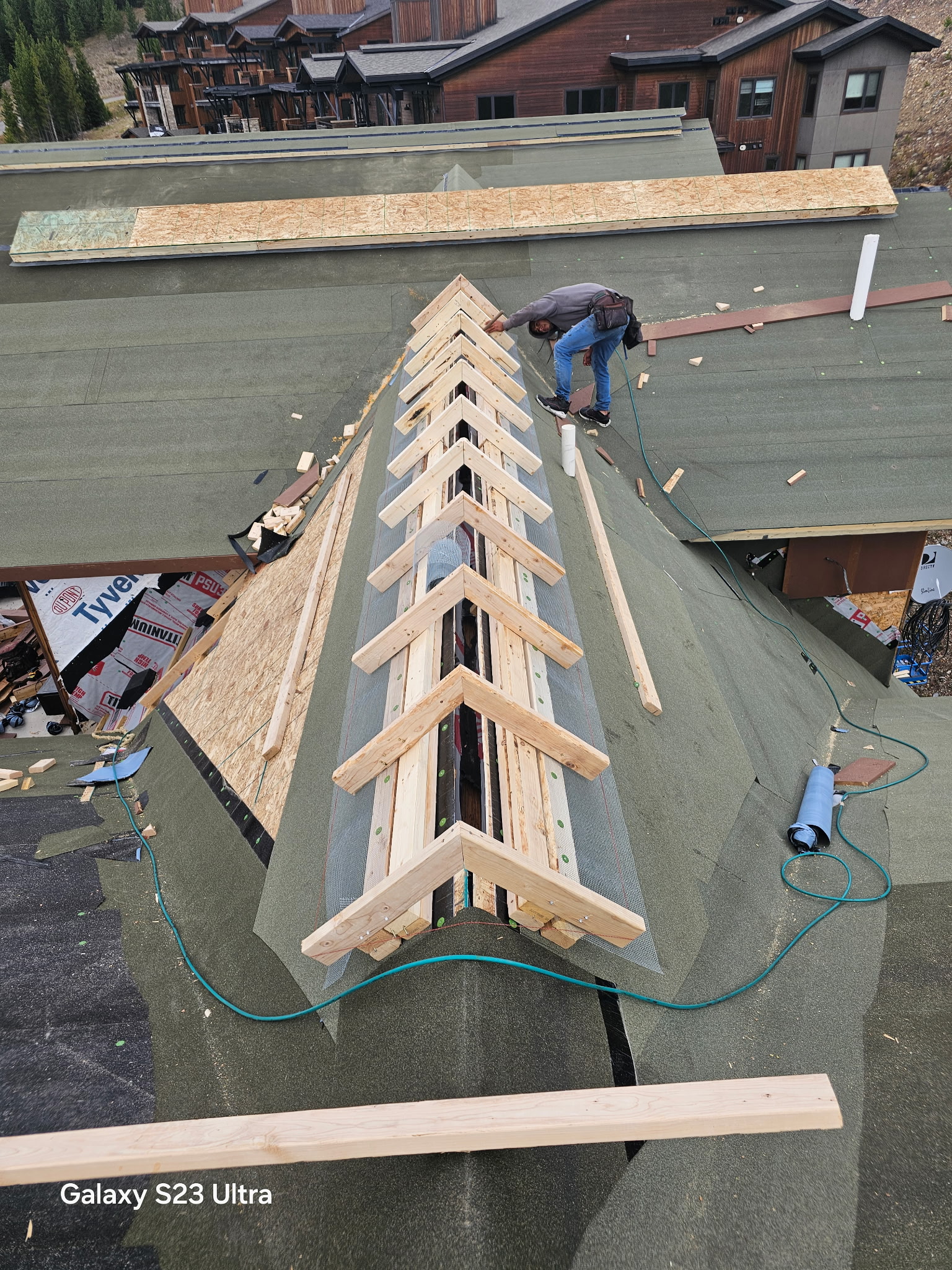
Our crew installs the full cold roof system — ventilation layer, counter battens, insulation, and roofing finish — to exacting specs with proper airflow calculations throughout.
05
Ventilation Verification
We verify airflow through the cold roof cavity before sign-off — confirming the system will perform as designed through Montana's first winter season.
06
Warranty & Follow-Up
Your warranty documents are delivered and we follow up after the first full winter to confirm the system is performing — no ice dams, no leaks, no issues.
Stop fighting ice dams every winter. A cold roof solves it permanently.
If your home gets ice dams every winter, a cold roof is the permanent solution. AMPCo will assess your home for free and tell you exactly whether a cold roof system is right for you.
A cold roof is a ventilated roof system that includes an air gap between the insulation layer and the roof deck. This keeps the roof surface at the same temperature as the outside air — preventing snow from melting and refreezing at the eaves. Standard roofs allow heat to escape through the deck, which melts snow unevenly and causes ice dams, water infiltration, and accelerated wear on roofing materials.
Good attic insulation helps but isn't the same as a cold roof system. Insulation reduces heat transfer into the attic, but complex roof lines, valleys, skylights, and dormers can still create warm spots that cause uneven snow melt and ice dams. A cold roof specifically addresses the roof deck temperature — it's the more complete solution for Montana's freeze-thaw climate. AMPCo can assess whether your current insulation is sufficient or whether a cold roof system would be beneficial.
Cold roof installation costs vary depending on your home's size, roof geometry, and the materials specified. It typically costs more than a standard roof installation due to the additional ventilation components and labor. However, when you factor in the long-term savings from preventing ice dam damage, structural repairs, and interior water damage, a cold roof is usually the most cost-effective choice for Western Montana homes. AMPCo provides a free assessment and written estimate.
Yes. A cold roof system can be installed during a roof replacement on an existing home. It involves adding a ventilated layer above the existing or new deck — which does add some height to the roof profile. Our assessment will determine if your home's structure is suitable and identify any modifications needed. Most Western Montana homes are good candidates for cold roof retrofitting.
A properly designed and installed cold roof system will eliminate ice dams caused by heat escaping through the roof deck — which is the primary cause in most Montana homes. Combined with adequate eave and ridge ventilation, a cold roof creates uniform roof surface temperatures that prevent the melt-and-refreeze cycle entirely. AMPCo designs each system to the specific ventilation requirements of your home.
Cold roof installation typically takes longer than a standard replacement — most residential projects take 3–5 days depending on the size and complexity of the roof. The additional time accounts for the ventilation layer, counter batten installation, and airflow verification. We'll provide an accurate timeline in your written estimate before any work begins.