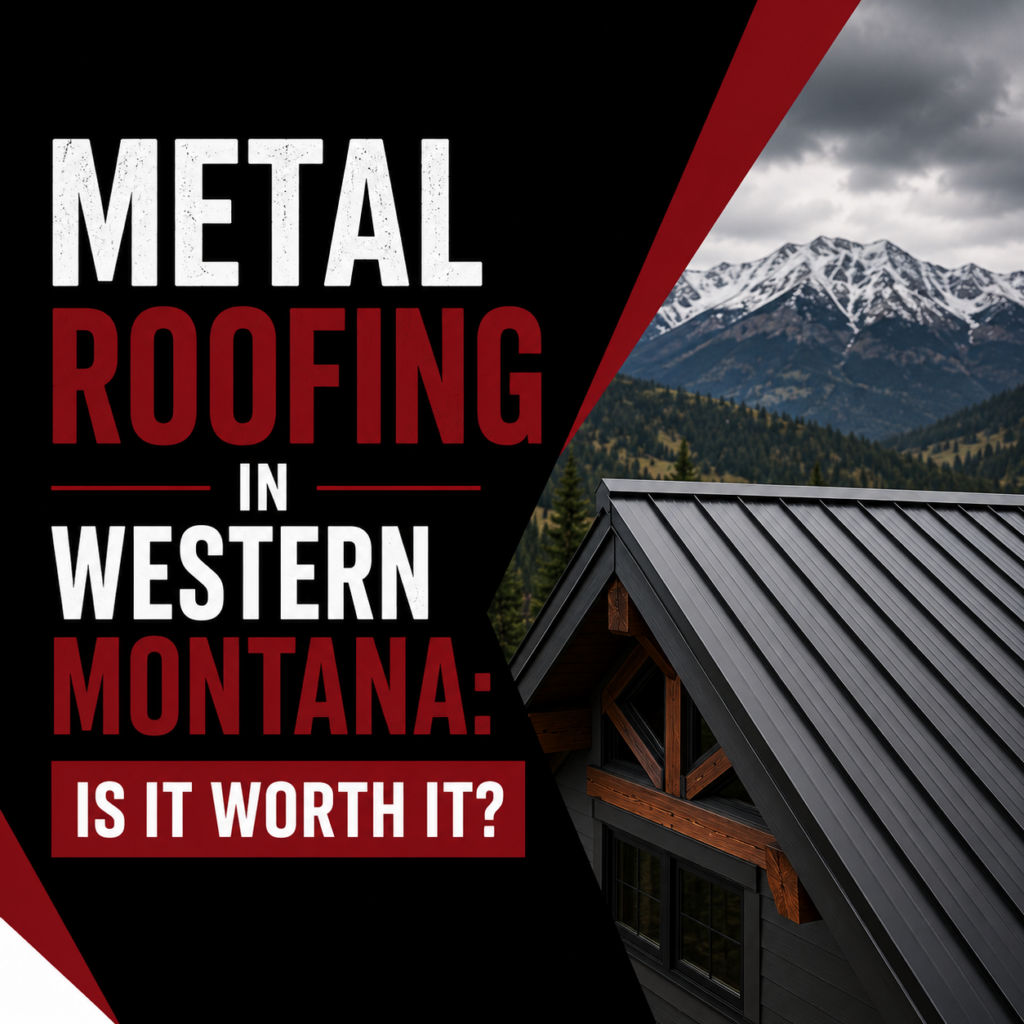
Metal roofing has been around for well over a century, but it’s seen a significant surge in interest among Western Montana homeowners over the last decade — and for good reason. In a climate defined by hailstorms, heavy snow loads, fierce winds, and dramatic temperature swings, metal performs in ways that asphalt simply can’t match.
That said, metal roofing isn’t the right choice for every homeowner or every situation. The upfront cost is real, and there are considerations that matter in Montana specifically. Here’s an honest breakdown from a contractor who installs both.
What Types of Metal Roofing Are Available?
Standing Seam Metal Roofing
The most common metal roofing system for residential use in Western Montana. Standing seam consists of vertical metal panels that interlock at raised seams, with no exposed fasteners on the roof surface. This design is highly resistant to water infiltration, handles snow and ice exceptionally well, and allows the metal to expand and contract with temperature changes without stressing the fasteners.
Standing seam is the premium option — more labor-intensive to install, but the most durable and longest-lasting system available.
Metal Shingles
Metal shingles are stamped or formed to mimic the appearance of traditional asphalt shingles, wood shakes, or slate. They offer many of the performance advantages of metal at a somewhat lower price point than standing seam, with a more familiar aesthetic for homeowners who aren’t sold on the look of panel roofing.
Exposed Fastener Metal Panels (Corrugated/R-Panel)
Common on agricultural buildings and some rural residential applications across Western Montana. Less expensive than standing seam, but the exposed fasteners are a long-term maintenance consideration — the rubber washers around each screw eventually deteriorate and can become entry points for water.
Why Metal Performs Well in Montana’s Climate
Hail resistance. Most metal roofing products carry Class 4 impact resistance ratings — the highest available. Where a significant hail event can strip granules and shorten the life of asphalt shingles, metal typically shows only minor cosmetic denting without any compromise to its weather-sealing performance. Many insurance companies offer premium discounts for Class 4 rated roofing systems.
Snow shedding. Standing seam metal naturally sheds snow rather than holding it. This reduces snow load on the structure and, when combined with proper attic ventilation, minimizes the ice dam conditions that cause so many problems on asphalt-shingled roofs in Western Montana winters.
Wind resistance. Properly installed standing seam metal handles high winds exceptionally well. There are no individual shingles to lift or lose — the interlocked panel system behaves as a single continuous surface.
Longevity. A standing seam metal roof in Western Montana can realistically last 40–70 years. For a homeowner planning to stay in their home long-term, that may mean installing a roof once and never dealing with it again.
Low maintenance. Metal roofs don’t require the periodic treatment that wood shakes need, don’t suffer the granule loss that asphalt does, and don’t develop the moss and algae issues that can affect asphalt in wetter microclimates. Periodic inspection and keeping gutters clear is essentially the maintenance program.
The Real Considerations Before Choosing Metal
Upfront cost. Standing seam metal roofing typically costs 2–3x what a quality architectural shingle roof costs. For a homeowner who may move in 5–10 years, the lifecycle math doesn’t always pencil out in metal’s favor. For someone planning to stay long-term, it often does — especially when you factor in the cost of an asphalt replacement 20–25 years from now.
Snow guards may be needed. Metal’s snow-shedding performance is generally an advantage, but on roofs with entries, walkways, or landscaping below the eave line, sudden snow release can be a hazard. Snow guards or snow retention systems are often recommended for these situations and should be factored into the cost.
Noise. Some homeowners are concerned about noise during rain or hail. In practice, a properly installed metal roof over a solid decking with underlayment isn’t significantly louder than an asphalt roof — the decking and attic space absorb most of the sound. It’s worth discussing if it’s a concern.
Not all metal is equal. Gauge (thickness), coating system, and substrate type vary significantly across metal roofing products. A quality standing seam system with a Kynar 500 or Hylar 5000 finish coating and a Galvalume or aluminum substrate is a fundamentally different product than a low-gauge corrugated panel with a basic paint finish. Make sure you know what you’re getting quoted on.
Metal Roofing and Your Insurance
Given the Class 4 impact resistance of most standing seam metal products, it’s worth calling your homeowner’s insurance provider before making a final material decision. Premium discounts for Class 4 rated roofs are available through many carriers and can partially offset the higher upfront cost over the life of the policy.
Is Metal Right for Your Home?
Metal roofing makes the most sense for homeowners who:
- Plan to stay in their home for 15+ years
- Have experienced repeated hail damage on previous roofs
- Want to minimize long-term maintenance
- Are replacing a roof on a home with complex geometry where a premium result is worth the investment
- Are interested in the aesthetic of standing seam or metal shingles
If you’re on the fence, the best starting point is a free estimate that prices out both options — metal and architectural asphalt — so you can compare the numbers side by side for your specific home.
Talk to AMPCo About Metal Roofing
AMPCo Construction installs both standing seam metal and metal shingle systems across Western Montana. We’ll give you a straight assessment of whether metal makes sense for your home, what it will cost, and what you can realistically expect from it in this climate.
Request a free estimate or schedule a free inspection online. Or call us directly at (406) 310-1077. We serve Butte, Anaconda, Hamilton, Dillon, Stevensville, Deer Lodge, and all of Western Montana.